In this guide
The most important part of French Bulldog care is heat: their flat faces make them overheat and struggle to breathe much sooner than most dogs. Keep walks short and cool, use a harness instead of a collar, keep them lean and clean their skin folds a few times a week.
French Bulldog at a glance
| Weight | Usually under 28 lb (13 kg) |
| Height | About 11–13 in (28–33 cm) |
| Lifespan | About 10–12 years |
| Energy | Low to moderate |
| Shedding | Light to moderate |
| Heat tolerance | Poor |
Why Frenchies need special care: the flat face
French Bulldogs are brachycephalic (say “brack-ee-seh-FAL-ik”), which means a short, flat face. That squashed-up airway can mean:
- Narrow nostrils and a long soft palate that partly blocks the airway
- Trouble cooling down, because dogs cool off mainly by panting
- Noisy breathing and snoring
- A higher risk of heatstroke
Some Frenchies breathe much better than others. If yours snores loudly, struggles on walks, or makes snorting or gagging sounds, ask your vet about BOAS (brachycephalic obstructive airway syndrome). Treatment can make a big difference to quality of life.
Keeping your Frenchie cool
Heat is the number-one danger for this breed.
- Walk early in the morning or late in the evening in warm weather.
- Keep them indoors with AC or fans on hot days.
- Always provide shade and fresh water.
- Use a cooling mat or damp towel to lie on.
- Never leave a dog in a parked car — not even for “just a minute”.
Signs of overheating: heavy, noisy panting, a very red or purple tongue, drooling, wobbliness, vomiting or collapse. Move your dog somewhere cool, offer water, wet them with cool (not ice-cold) water, and call a vet immediately — heatstroke is an emergency.
Exercise
Frenchies need daily activity, but gentle is best:
- Two or three short walks a day (around 15–20 minutes each)
- Indoor play and short training sessions
- Puzzle toys for the brain
Skip long runs, hard fetch sessions and anything in the heat. Let your Frenchie set the pace and stop if they start breathing heavily.
Water warning: most French Bulldogs can’t swim well. Supervise them near pools, lakes and the beach, and use a dog life jacket.
Harness, not collar
A collar presses on the throat and can make breathing harder. Use a well-fitted harness that sits on the chest, not across the neck.
Feeding your Frenchie
- Keeping a Frenchie lean is one of the best things you can do for their breathing and joints.
- An adult at a healthy 20–25 lb usually needs roughly 600–700 calories a day. See our feeding chart.
- Feed two measured meals a day. Slow-feeder bowls help gulpers, who can swallow air and get gassy.
- Some Frenchies have food sensitivities that show up as itchy skin or upset tummies. If you notice this, talk to your vet before changing food.
Want a low-calorie snack? Green beans, cucumber and carrot coins are good options — see 15 human foods dogs can eat.
Wrinkle, skin and ear care
- Clean the face folds two or three times a week with a soft, damp cloth or a vet-recommended wipe, then dry thoroughly. Trapped moisture can lead to infection.
- Check the tail pocket (if your dog has one) and clean it gently.
- Look inside the ears weekly; their bat ears catch dirt.
- Brush once a week — Frenchies shed less than many breeds, but still shed.
- Watch for itchy skin, red paws and licking, which can be signs of allergies.
Common French Bulldog health issues
- Breathing problems (BOAS)
- Heat intolerance and heatstroke
- Skin fold infections and allergies
- Spine problems, such as intervertebral disc disease — watch for back pain, a hunched back or wobbly back legs
- Eye problems, including cherry eye and corneal ulcers (their eyes stick out more)
Regular vet checkups help catch problems early. Pet insurance is worth considering for this breed.
Is a Frenchie right for you?
French Bulldogs suit apartments and less active households, and they adore their people. They’re a good fit if you can keep them cool, manage their weight, and budget for vet care. If you want a running or hiking buddy, consider an active breed instead — like the Golden Retriever.
Frequently asked questions
How hot is too hot for a French Bulldog?
Frenchies can overheat at temperatures many other dogs handle easily. Many vets advise extra caution once it gets above about 75°F (24°C), especially with humidity. Walk early or late, keep them in the shade or air conditioning, and watch for heavy panting.
Can French Bulldogs swim?
Most French Bulldogs can’t swim well because of their heavy front end and short legs. Always supervise them near pools and water, and use a dog life jacket if they’re going near water.
Do French Bulldogs snore?
Many do, because of their short airways. But loud breathing while awake, struggling during exercise, gagging or collapsing are not normal and should be checked by a vet.
How much should a French Bulldog eat?
An adult French Bulldog at a healthy 20–25 lb typically needs around 600–700 calories a day, depending on activity. Measure meals and keep them lean — extra weight makes breathing harder.
Sources
- American Kennel Club — French Bulldog breed page
- VCA Animal Hospitals — Brachycephalic Airway Syndrome
- American Kennel Club — Heatstroke in Dogs
We summarize what these organizations publish in plain English. How we write and check our guides.
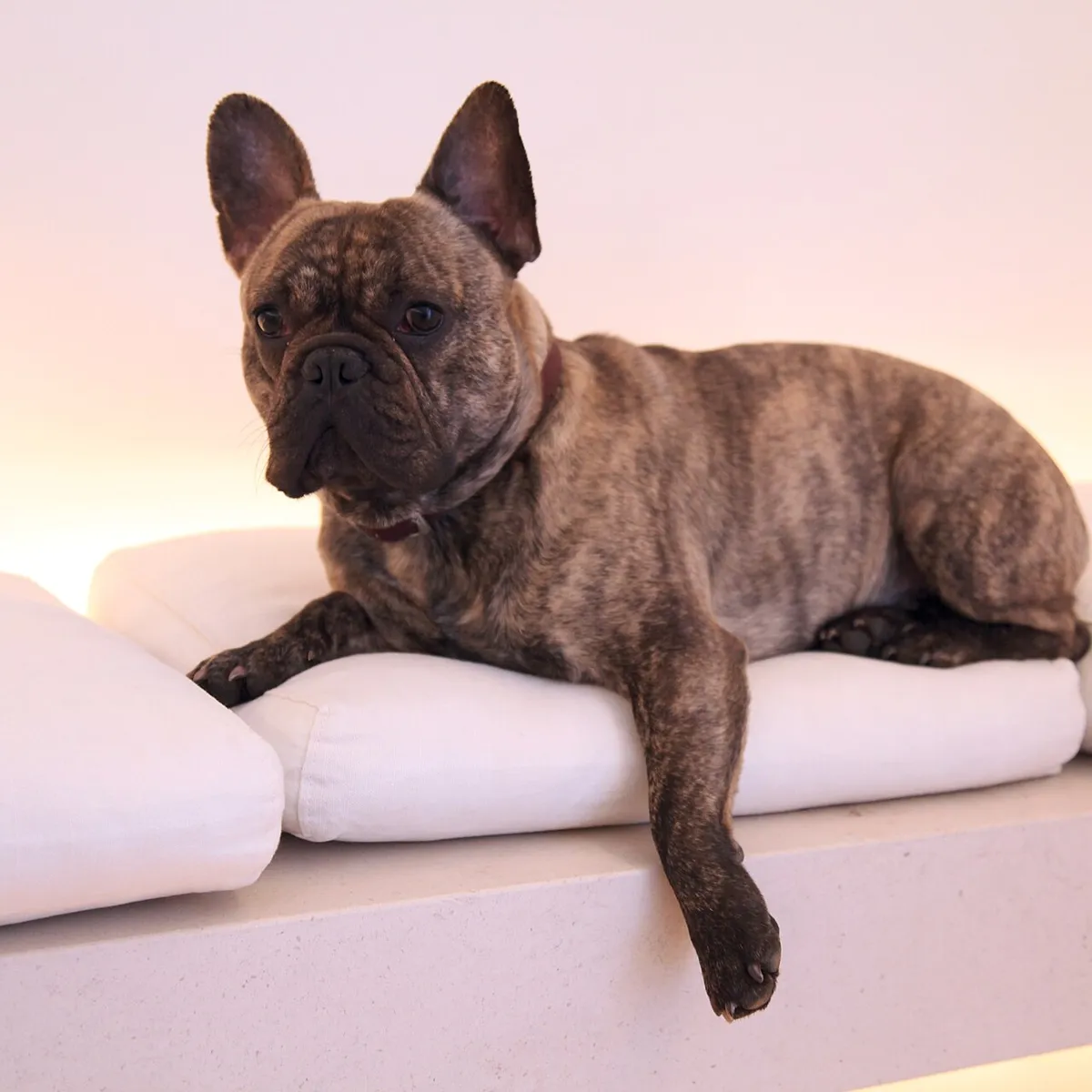
Photo: “A Brindle French Bulldog” by Nicolas de Camaret, CC BY 2.0, cropped.

Not a substitute for your vet
This guide is general information for healthy adult dogs. Every dog is different — age, size, allergies and health conditions all matter. Ask your veterinarian before changing your dog’s diet or care.
Possible poisoning? US: ASPCA Animal Poison Control (888) 426-4435 or Pet Poison Helpline (855) 764-7661 (fees may apply). Elsewhere: call your vet or nearest emergency animal hospital right away.
 Up next Golden Retriever Care Guide: Food, Exercise, Grooming & Health
Save this for later — pin it to your dog board so you can find it fast.
Pin itKeep reading
-

How to Keep Your Dog Cool in the Heat
The 7-second pavement test, safe walking times, which dogs overheat fastest and the signs of heatstroke — for US and Australian summers.
7-second pavement test before walks -
Why Do Dog Paws Smell Like Fritos?
That corn-chip smell from your dog’s paws is usually normal bacteria and yeast. Here’s why it happens, how to keep paws clean and when to call the vet.
Usually normal bacteria & yeast -

Can Dogs Eat Bananas? Yes.
Bananas are a safe, healthy treat for most dogs in small amounts. How much to give by size, how to serve it, and when to skip it.
Small dog: 1–2 slices · Large: ½ banana