In this guide
Keep your dog cool by walking only in the early morning or late evening, giving constant shade and water, and never leaving them in a parked car. If your dog pants heavily, drools, wobbles or collapses in the heat, cool them with cool (not ice-cold) water and go to a vet straight away — heatstroke can kill within hours.
Summer means June to August in the US and December to February in Australia — but heatwaves happen outside those months too.
The 7-second pavement test
Put the back of your hand flat on the pavement for 7 seconds. If you can’t keep it there comfortably, it’s too hot for your dog’s paws. On a sunny day, asphalt can be much hotter than the air — often over 120°F (49°C) when the air is around 77°F (25°C). Walk on grass or in the shade, or wait until evening.
Who overheats fastest
| Higher-risk dogs | Why |
|---|---|
| Flat-faced breeds (French Bulldogs, Pugs, Bulldogs) | Short airways make panting less effective — see our French Bulldog guide |
| Overweight dogs | Fat insulates and strains the heart — is my dog overweight? |
| Puppies and senior dogs | Less able to regulate temperature |
| Thick or dark coats | Absorb and hold more heat |
| Dogs with heart or breathing problems | Less reserve |
| Very active dogs (retrievers, working breeds) | Keep running even when overheated |
10 ways to keep your dog cool
- Walk at dawn or after sunset. Shorten walks on hot days.
- Shade and water everywhere — at home, in the yard and on walks. Two bowls are better than one (keep them clean).
- Indoors with AC or fans in the hottest part of the day.
- Cooling mat or damp towel to lie on.
- Paddling pool in the shade for dogs who like water (always supervised).
- Frozen treats — try our 3-ingredient frozen dog treats.
- Brush out the undercoat instead of shaving double coats.
- Skip fetch and running on hot afternoons; do sniffing games indoors.
- Protect light-skinned dogs from sunburn with shade (ask your vet about pet-safe sunscreen).
- Never leave your dog in the car. The inside can heat up by around 20°F (11°C) in 10 minutes, even with windows cracked.
Signs of heatstroke
- Heavy, noisy panting that doesn’t settle
- Very red or purple gums and tongue (see our gum color chart)
- Thick drool
- Weakness, wobbling or confusion
- Vomiting or diarrhea
- Collapse or seizures
What to do right now
- Move your dog out of the heat — shade or air conditioning.
- Wet them with cool (not ice-cold) water, especially the belly, armpits and paws, and put them in front of a fan.
- Offer small sips of water if they’re alert. Don’t force it.
- Go to a vet immediately, cooling on the way. Call ahead so they’re ready.
Even if your dog seems to recover, a vet check is important: heatstroke can damage organs, and problems may show up hours later.
Frequently asked questions
What temperature is too hot to walk a dog?
There’s no single number, because humidity, sun, the surface and your dog all matter. Many vets advise extra caution above about 75–80°F (24–27°C), and much more for flat-faced breeds. Asphalt in the sun can be far hotter than the air.
Should I shave my double-coated dog in summer?
Usually not. A double coat helps protect from sun and heat. Brushing out the loose undercoat helps much more. Ask a groomer about a tidy trim instead.
Can I give my dog ice cubes?
Ice cubes and frozen treats are fine for most dogs as a cool snack. To cool down an overheated dog, use cool — not ice-cold — water on the body, and head to a vet.
How quickly can a car get dangerously hot?
Very quickly. On a warm day, the inside of a parked car can heat up by around 20°F (11°C) in about 10 minutes, even with the windows cracked.
Sources
- American Kennel Club — Heatstroke in Dogs
- VCA Animal Hospitals — Heat Stroke in Dogs
- ASPCA — Hot Weather Safety Tips
- RSPCA Australia Knowledgebase — Dogs
We summarize what these organizations publish in plain English. How we write and check our guides.
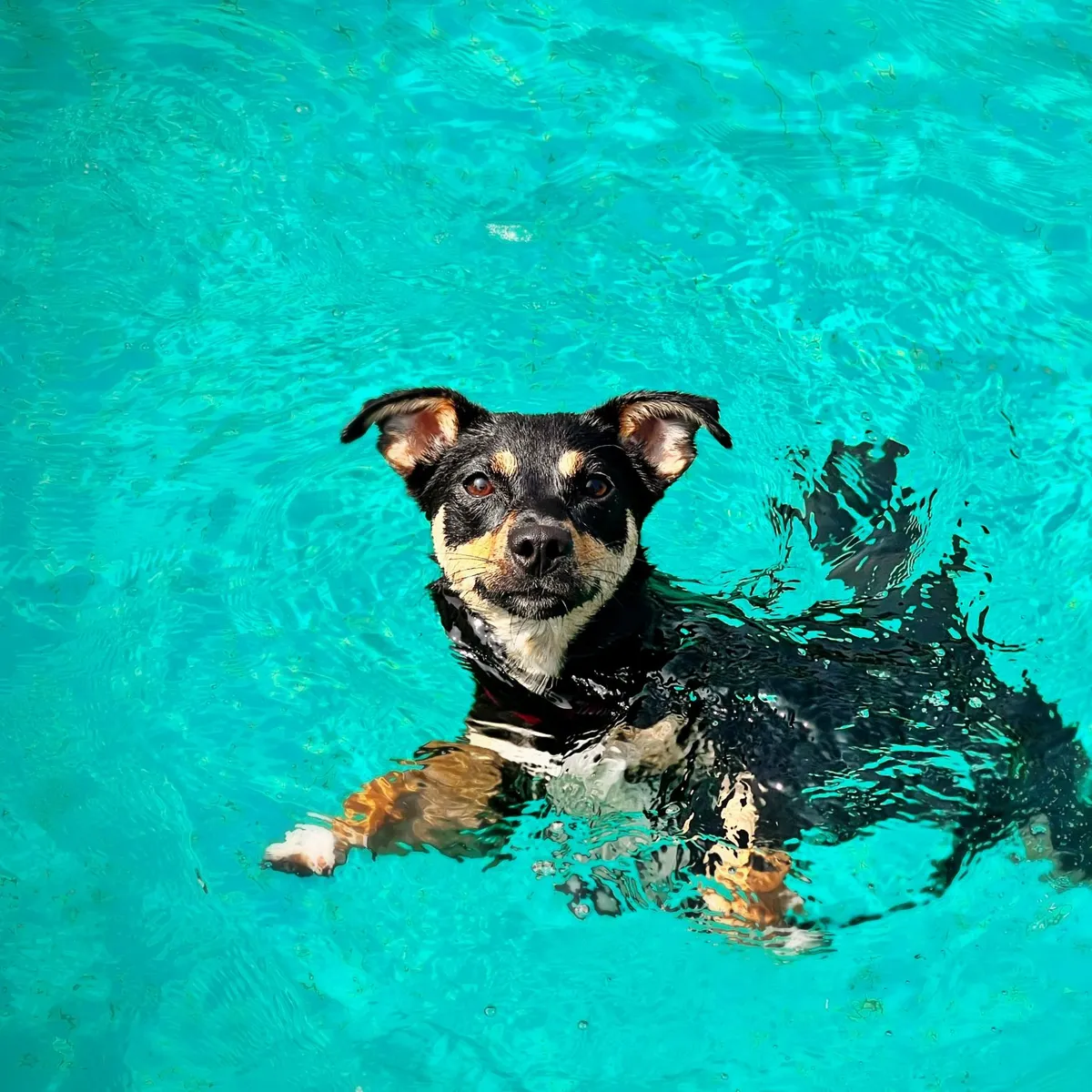
Photo: “A very relaxed dog swimming in a blue swimming pool.” by Carole Olinger, CC0, cropped.
Not a substitute for your vet
This guide is general information for healthy adult dogs. Every dog is different — age, size, allergies and health conditions all matter. Ask your veterinarian before changing your dog’s diet or care.
Possible poisoning? US: ASPCA Animal Poison Control (888) 426-4435 or Pet Poison Helpline (855) 764-7661 (fees may apply). Elsewhere: call your vet or nearest emergency animal hospital right away.
 Up next Dog Gum Color Chart: What’s Normal and What’s an Emergency
Save this for later — pin it to your dog board so you can find it fast.
Pin itKeep reading
-
12 Signs Your Dog Is Happy
Soft eyes, a wiggly body, the play bow and more: 12 clear signs your dog is happy, plus the stress signals that are easy to miss.
Loose body, soft eyes, open mouth -
Why Do Dog Paws Smell Like Fritos?
That corn-chip smell from your dog’s paws is usually normal bacteria and yeast. Here’s why it happens, how to keep paws clean and when to call the vet.
Usually normal bacteria & yeast -
Why Does My Dog Tilt Their Head?
Most head tilts mean your dog is listening hard. A tilt that doesn’t go away, with scratching, head shaking or wobbling, can be an ear or balance problem.
Constant tilt + scratching = see the vet