In this guide
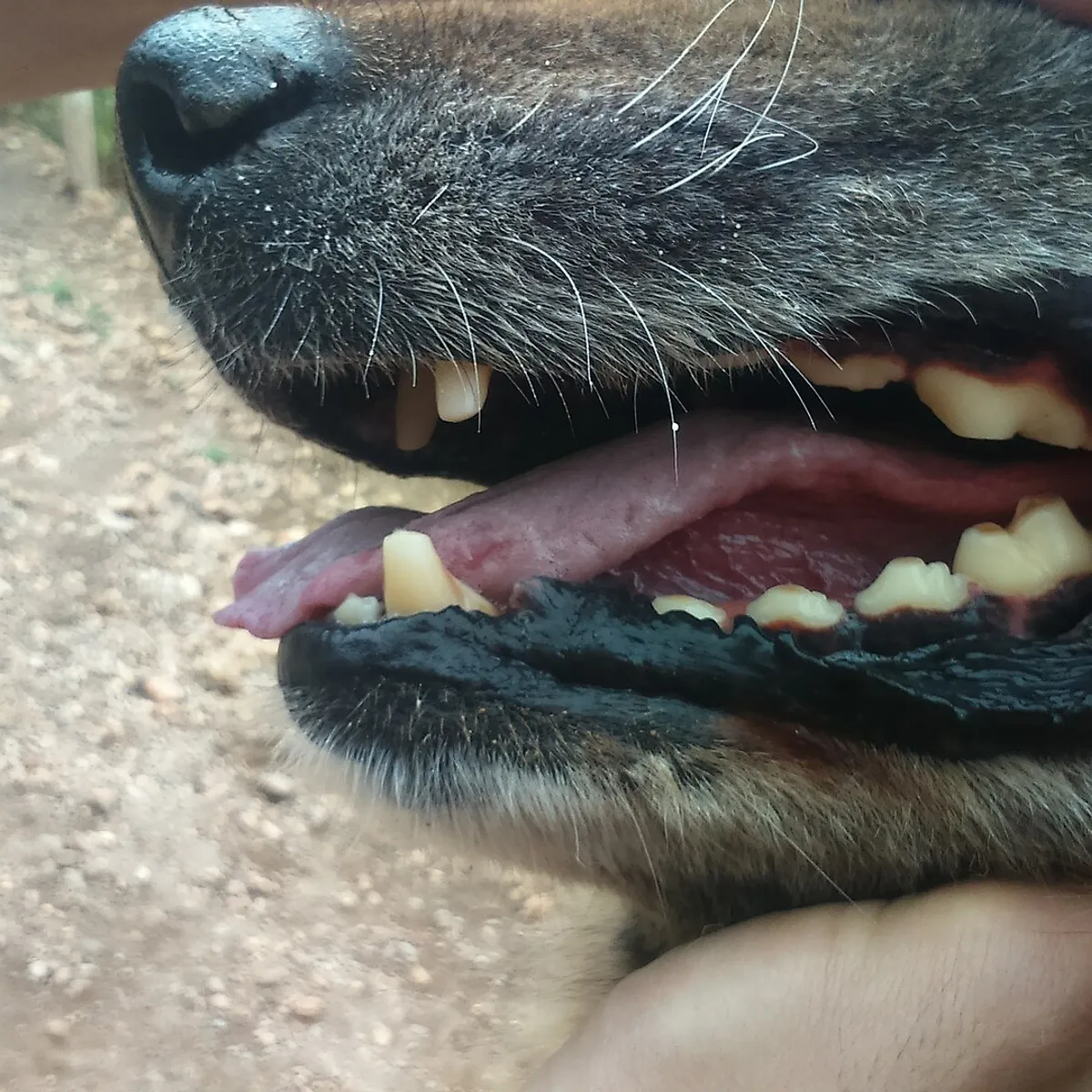
Healthy dog gums are bubblegum or salmon pink, feel moist, and turn pink again within about 2 seconds after you press them. Pale or white, blue or gray, and bright cherry-red gums are emergencies — call your vet or go to an emergency clinic right away.
Checking gums takes 10 seconds and is one of the most useful things you can learn as a dog owner. Practice when your dog is healthy, so you know what normal looks like for them.
How to check your dog’s gums (10 seconds)
- Lift the upper lip at the side, above the big canine tooth, in good light (daylight or a phone flashlight).
- Look at the color of the gum just above the teeth.
- Touch it. It should feel wet and slippery, not dry or sticky.
- Press gently with a fingertip until the spot turns pale, then let go.
- Count: “one-Mississippi, two-Mississippi.” The pink should be back before you reach two. This is the capillary refill time.
Dog gum color chart
| Gum color | What it can mean | What to do |
|---|---|---|
| Bubblegum / salmon pink, moist | Normal | Nothing — note it as your dog’s baseline |
| Black or spotted (in some breeds) | Normal pigment | Check a pink patch or the inside of the lower eyelid instead |
| Pale pink or white | Blood loss (including internal bleeding), anemia, shock | Emergency — go now |
| Blue, purple or gray | Not enough oxygen: breathing or heart problems, choking | Emergency — go now |
| Bright cherry red | Heatstroke, carbon monoxide, severe infection | Emergency — go now |
| Yellow | Jaundice: liver problems or red blood cell destruction | Vet the same day |
| Brown or muddy | Some poisonings (such as acetaminophen) | Emergency — go now |
| Tiny red dots or bruise-like patches | Bleeding or clotting problems, some poisons | Vet the same day — sooner if other signs |
| Red line along the teeth, bad breath | Gingivitis / dental disease | Book a vet visit |
| Dry, sticky, slow refill (over 2–3 sec) | Dehydration, poor circulation | Call your vet; emergency if your dog is weak |
Reading the refill time: fast, normal and slow
The Merck Veterinary Manual’s triage guide uses three bands for capillary refill time, and each one points somewhere different:
| Refill time | What vets read into it | What you do at home |
|---|---|---|
| Under 1 second, gums dark or red | A “hyperdynamic” state — the body is pushing blood hard, as in early shock, heatstroke or a severe infection | If your dog is calm and resting, call your vet now. Re-check after 10 minutes of rest if they just played |
| 1–2 seconds, gums pink | Normal blood flow | Nothing to do |
| Over 2 seconds, or the spot stays pale | Poor perfusion: shock, blood loss, dehydration, heart trouble | Emergency — call ahead and go |
Two things throw the test off. A dog that has just sprinted around the yard can show quick, slightly dark refill that settles within minutes. And a dog that has been lying on a cold floor or in a cold car may refill a little slowly at first. If the number is borderline, warm or calm your dog, wait a few minutes and test the same spot again. A result that stays outside 1–2 seconds is the one that counts.
Dogs with black or spotted gums: where to look instead
Chow Chows, Shar-Peis and many mixed breeds have gums that are partly or fully black, so the color chart doesn’t work on them. You still have options:
- Search the whole mouth for a pink patch. Lift both upper lips and pull the lower lip down at the front. Many “black-gummed” dogs have a pink strip somewhere, often near the front teeth. Note where it is while your dog is healthy.
- Use the inner lower eyelid. Gently pull the skin below one eye down with your thumb. The tissue inside should be pink, like healthy gums. Pale, white or yellow here means the same as it does on the gums.
- Check the whites of the eyes and the inside of the ear flaps for yellow. VCA Animal Hospitals notes jaundice is easiest to see in the gums, the whites of the eyes and the ear flaps — and that dark pigment can hide it.
- Do the refill test on any pink patch you find. It works on a small area as well as a large one.
If you can’t find any pink tissue at all, rely more on the other signs in the shock check below, and tell the vet on the phone that your dog has pigmented gums.
Check these alongside gum color
Gum color is one clue. Vets look at it together with heart rate, pulse and alertness, and you can check the same things in under a minute:
- Heart rate. Put your hand flat on the left side of the chest, just behind the elbow. Count beats for 15 seconds and multiply by 4. Merck lists a normal resting range of about 60–120 beats per minute for large dogs and 70–120 for small dogs, and treats over 180 as fast. Write the number down.
- Breathing. Count breaths for 30 seconds and double it while your dog is resting. Note any open-mouth breathing in a cool room, noisy breaths or belly heaving.
- Alertness. Does your dog lift their head and follow you with their eyes? Merck describes dogs in early shock as usually still alert, becoming less responsive as shock worsens, and finally losing consciousness.
- Temperature of the ears and paws. Cold legs and ears in a warm room go along with poor circulation.
Merck’s description of how shock progresses in dogs ties these together: early on, a fast heart, strong pulses and quick refill; then pale gums, weaker pulses and a quieter dog; and at the end, gray or ashen gums. In other words, a dog can look alert and still be in trouble — the gums and refill often change before your dog collapses.
Pale gums with tiredness have a long list of causes. VCA’s page on anemia in dogs groups them into blood loss (including heavy flea, tick or hookworm loads and bleeding tumors), red blood cell destruction (immune disease, blood parasites, and toxins such as zinc, rat poison, onions and garlic) and low production in the bone marrow. Only blood tests can tell them apart, which is why pale gums always mean a vet visit.
When it’s an emergency
Go straight to a vet or emergency clinic if unusual gum color comes with any of these:
- Weakness, collapse or confusion
- Fast, noisy or difficult breathing
- A swollen belly or retching without vomiting
- Heavy panting on a hot day (see heatstroke signs)
- Possible poisoning — for example rat bait, medicines, chocolate or xylitol
In the US you can also call ASPCA Animal Poison Control at (888) 426-4435 or the Pet Poison Helpline at (855) 764-7661 (fees may apply). Elsewhere, call your vet or nearest emergency animal hospital.
What to tell the vet on the phone
Calling ahead lets the clinic get ready, and a clear 30-second report helps them decide how fast you need to come. Have this ready:
- Gum color in plain words (“white,” “grayish,” “yellow,” “brick red”) and where you looked
- Refill time in seconds — or “it stayed pale”
- Heart rate and breathing rate you counted
- When it started and whether it’s getting worse
- Anything your dog could have eaten or got into: medicines, rat bait, plants, xylitol gum. Bring the packet if you have it
- Other signs: vomiting, diarrhea, blood anywhere, a swollen belly, collapse, limping after a fall
- Your dog’s weight, age and any medicines they take
- A photo of the gums in daylight, next to your saved “healthy” photo, if the clinic accepts pictures
Getting your dog there safely
- Keep them warm and still if they are weak or pale (cool them instead if this is heatstroke). Merck’s triage guidance warms shocked patients, so a blanket in the car is right for a pale, shaky dog.
- Carry rather than walk a weak dog. For a big dog, use a blanket as a stretcher with two people.
- Be careful of your face. A frightened, hurting dog may bite even its owner. Keep your face away from the mouth while you lift.
- Don’t give food, water or human painkillers to a collapsed dog unless the vet tells you to. Acetaminophen and ibuprofen are dangerous for dogs.
- Don’t wait to “see if it passes” with white, gray or blue gums. These are the colors where minutes matter.
Tips for an accurate check
- Use natural light if you can. Yellow kitchen lights can hide a pale or yellow tint.
- Compare left and right — a single red, swollen area is usually a dental issue rather than a whole-body problem.
- Excited dogs can have slightly darker pink gums after play. Re-check once they’re calm.
- Take a photo of healthy gums and keep it in your phone. It makes it much easier to spot a change.
Mistakes that lead to a wrong reading
- Pressing too long or too hard. A light press for a second or two is enough. Grinding a fingertip into the gum can bruise it and leave a red mark that looks like a problem.
- Testing on an inflamed spot. Gum right next to a tooth with tartar is often redder and refills oddly. Use the smooth gum higher up, above the canine.
- Checking only once, mid-panic. Two readings a few minutes apart, with your dog lying still, are worth more than one rushed look.
- Reading a red mouth after a hot walk as normal. Bright red gums plus heavy panting, drooling or wobbliness on a warm day is heatstroke until proven otherwise.
- Ignoring “slightly pale” in a large, older dog. Pale gums with sudden weakness can come from internal bleeding. The AKC’s page on hemangiosarcoma, a bleeding tumor of the spleen and other organs, lists pale gums and sudden collapse among its signs and names breeds such as Golden Retrievers and German Shepherds as higher risk (see our Golden Retriever care guide).
- Never having looked before. If you don’t know what your dog’s gums normally look like, you can’t tell “a bit pale” from “always like that.” Check once a week for a month — it takes a few seconds — and it becomes a habit.
Gum checks pair well with the hands-on body condition check and watching your dog’s mood and energy (see signs your dog is happy). None of these replace your vet — they help you notice when to call.
Frequently asked questions
What color should a dog’s gums be?
Healthy gums are usually bubblegum or salmon pink and feel moist. Some breeds, such as Chow Chows, have naturally dark or spotted gums, which is normal for them.
What is capillary refill time?
It’s how long the gum takes to turn pink again after you press it with a fingertip. In a healthy dog it’s usually under about 2 seconds. Slower refill can mean poor circulation, shock or dehydration.
Why are my dog’s gums pale?
Pale or white gums can be a sign of blood loss, anemia, shock or a serious illness. It’s an emergency: call your vet or go to an emergency clinic right away.
My dog’s gums are dry and sticky. What does that mean?
Tacky gums can be a sign of dehydration. Offer water and call your vet, especially if your dog is also vomiting, has diarrhea, is weak or has been in the heat.
How do I check a dog with black gums?
Look for any pink patch elsewhere in the mouth, or gently pull down the lower eyelid and check the pink tissue inside. Look for yellow in the whites of the eyes and inside the ear flaps.
What is a normal heart rate for a dog at rest?
The Merck Veterinary Manual lists about 60–120 beats per minute for large dogs and 70–120 for small dogs at rest. Count for 15 seconds with your hand behind the left elbow and multiply by 4.
Sources
- Merck Veterinary Manual — Primary Survey, Triage and Resuscitation in Animals
- Merck Veterinary Manual — Dog Owners section
- American Kennel Club — Health advice
- Cornell Riney Canine Health Center — Canine Health Topics
We summarize what these organizations publish in plain English. How we write and check our guides.
Photo: “DentalAbrasion” by Roquex, CC0, cropped.
Not a substitute for your vet
This guide is general information for healthy adult dogs. Every dog is different — age, size, allergies and health conditions all matter. Ask your veterinarian before changing your dog’s diet or care.
Possible poisoning? US: ASPCA Animal Poison Control (888) 426-4435 or Pet Poison Helpline (855) 764-7661 (fees may apply). Elsewhere: call your vet or nearest emergency animal hospital right away.
 Up next How to Keep Your Dog Cool in Hot Weather (+ Heatstroke Signs)
Save this for later — pin it to your dog board so you can find it fast.
Pin itKeep reading
-
How Short Should Dog Nails Be?
Dog nails should not touch the floor when your dog stands. How to check, how to trim without hitting the quick, and how often to do it.
Click-click on the floor = too long -
12 Signs Your Dog Is Happy
Soft eyes, a wiggly body, the play bow and more: 12 clear signs your dog is happy, plus the stress signals that are easy to miss.
Loose body, soft eyes, open mouth -
Why Do Dog Paws Smell Like Fritos?
That corn-chip smell from your dog’s paws is usually normal bacteria and yeast. Here’s why it happens, how to keep paws clean and when to call the vet.
Usually normal bacteria & yeast