In this guide
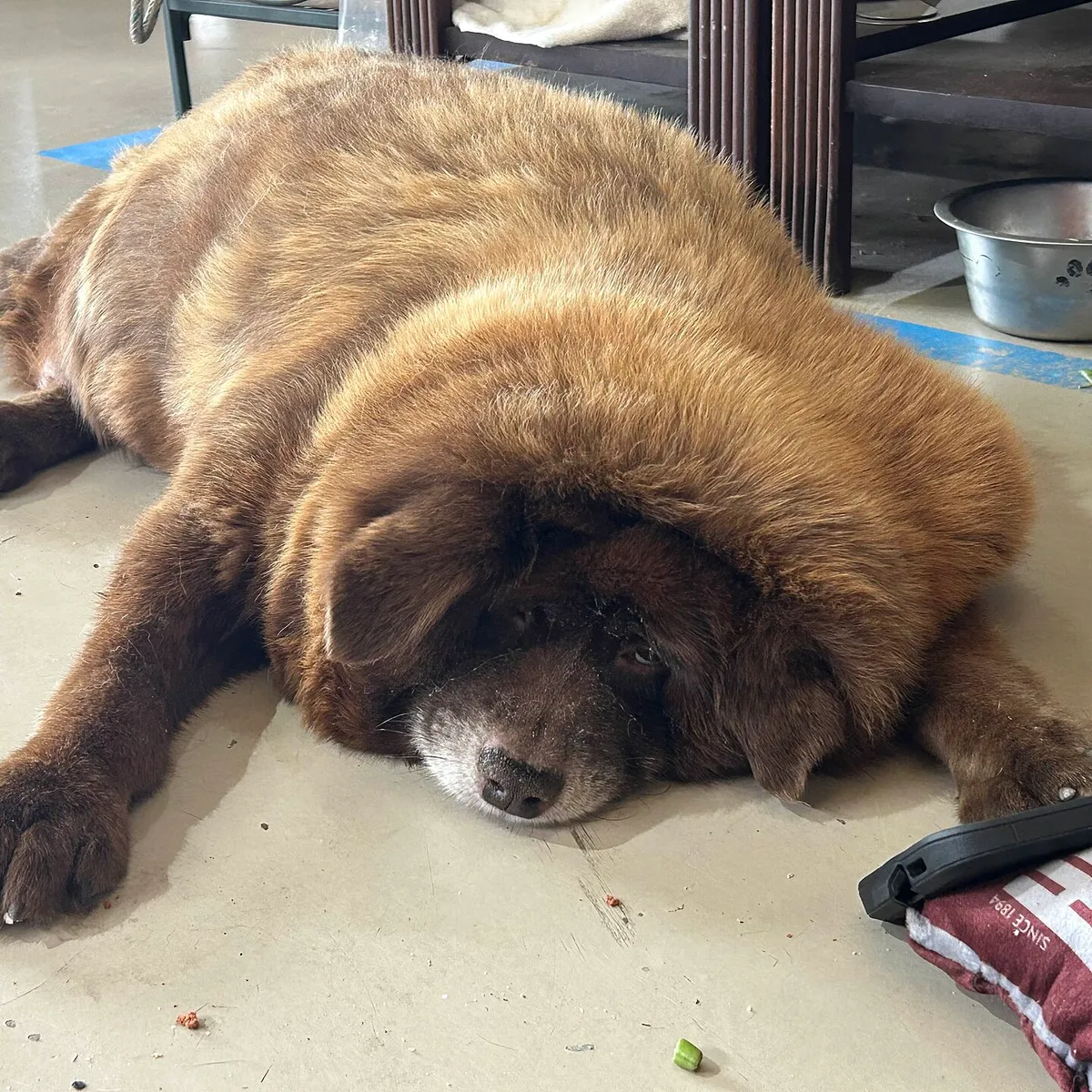
If you have to press to feel your dog’s ribs, can’t see a waist from above and the tummy doesn’t tuck up from the side, your dog is probably overweight. You can check in about 30 seconds with your hands.
You’re far from alone: vet surveys suggest more than half of pet dogs in the US are overweight or obese, and most of their owners think their dog is a normal weight.
Want a quick answer? Take our free Is My Dog Overweight? 30-second quiz.
The 3 quick checks
1. The rib check
Put your flat hands on your dog’s sides and run them along the ribcage.
- Ideal: you can feel each rib easily, with a thin layer of fat — like the knuckles on the back of your hand.
- Overweight: you have to press to find the ribs — like feeling the bones through your palm.
- Obese: you can’t really feel the ribs at all.
2. The waist check (from above)
Stand over your dog and look down.
- Ideal: a clear waist behind the ribs, like a gentle hourglass.
- Overweight: the waist is hard to see; the body looks like a tube.
- Obese: the back is broad and the sides bulge out.
3. The tummy check (from the side)
- Ideal: the belly slopes up from the chest towards the back legs (a “tummy tuck”).
- Overweight: the tummy line is flat.
- Obese: the belly hangs down or sways when they walk.
Vets turn these checks into a body condition score from 1 (very thin) to 9 (obese). The ideal is around 4–5.
Where your dog lands on the 1–9 scale
This combines the WSAVA body condition chart with the 2022 vet-assessed survey from the Association for Pet Obesity Prevention:
| Score | What you find | Share of US dogs (APOP 2022) |
|---|---|---|
| 1–3: under ideal | Ribs, spine tops and hip bones easy to see; little or no fat to feel | under 2% |
| 4–5: ideal | Ribs easy to feel under a thin layer; waist visible from above; tummy tucks up | 40% |
| 6–7: overweight | Ribs felt only with pressure; fat over the lower back and tail base; waist faint or gone | 37% |
| 8–9: obese | Ribs not felt without firm pressure; no waist; belly hangs; fat on neck and legs | 22% |
So about 59% of dogs scored 6–9. The survey also asked owners first: 36% of dog owners whose dog scored 6–9 called their dog’s body “normal.” If your gut says “he’s just big-boned,” double-check with your hands.
On the scale, VCA Animal Hospitals defines overweight as 10–20% above ideal weight and obese as more than 20% above. For a dog whose ideal is 50 lb, that’s 55–60 lb for overweight and over 60 lb for obese.
Why a few extra pounds matter
For a small dog, 2 extra pounds is like a person carrying 15–20 extra pounds. Extra weight is linked to:
- Joint pain and arthritis
- Breathing problems — especially in flat-faced breeds like the French Bulldog
- Diabetes, skin problems and heat intolerance
- Less energy and a shorter life
The good news: weight is one of the most fixable health problems, and dogs don’t raid the fridge on their own — we’re in charge of the bowl.
A simple plan to help your dog slim down
Step 1: See your vet
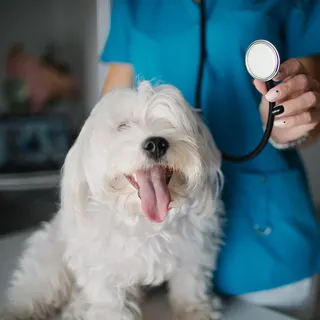
Your vet can confirm the body condition score, set a target weight, and rule out medical causes like an underactive thyroid. Ask how much weight to lose per week (usually 1–2% of body weight).
Step 2: Measure every meal
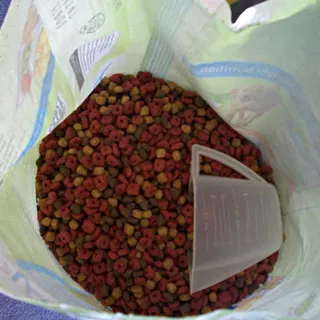
Use a real measuring cup or, better, a kitchen scale. A “scoop” is often much bigger than a cup. Work out the right amount with our dog food portion calculator using your dog’s ideal weight, and read how much to feed your dog.
Step 3: Cut treats first
Treats and table scraps are the hidden calories. Keep them under 10% of daily calories and swap to low-calorie options: green beans, carrot coins, cucumber or blueberries. See 15 human foods dogs can eat. Use part of your dog’s daily kibble as training rewards.
Step 4: Move a little more
Add 10 minutes to a daily walk, try sniff walks, fetch or swimming (if your dog likes it and it’s safe). Start slowly with heavy or older dogs.
Step 5: Slow down fast eaters
Puzzle feeders, snuffle mats and slow-feeder bowls make meals last longer and keep your dog’s brain busy.
Step 6: Check again every 2–4 weeks
Weigh your dog and repeat the three checks. Adjust portions by about 10% if nothing changes. Slow and steady wins.
A worked case: a 72 lb Lab with a 60 lb goal
Here’s the math for one dog, so you can follow it with your own numbers. Say your vet scores your neutered Labrador at 7 out of 9, weighs him at 72 lb and sets a target of 60 lb.
How far over is he? 72 ÷ 60 = 1.20, so he’s 20% above ideal — right on VCA’s line between overweight and obese.
Daily calories. A common starting point for weight loss is the resting energy requirement at the ideal weight — the “needs to lose weight” setting in our dog food calculator:
- 60 lb ÷ 2.2046 = 27.2 kg
- 27.20.75 ≈ 11.9
- 70 × 11.9 ≈ 834 kcal a day
Cups. Keep 10% (about 83 kcal) for treats, leaving about 751 kcal for food. With a kibble at 380 kcal per cup: 751 ÷ 380 = 1.98 cups a day, so 1 level cup per meal, twice a day.
The catch. By the same formula, maintenance for a neutered 72 lb dog is about 1,530 kcal (RER at 72 lb × 1.6). If your bag’s guide for 72 lb is in that range, 834 kcal is only about 55% of it. Tufts’ Petfoodology team advises that once you’re feeding less than 75% of a food’s label amount, you should switch to a lower-calorie or weight-management diet so the dog doesn’t fall short on nutrients. For a dog like this, that usually means a therapeutic weight-loss food from your vet, not just a smaller scoop. APOP’s 2022 survey found only about 1 in 5 owners of overweight pets had tried one.
The timeline. Losing 1% of current body weight per week:
| Week | Expected weight |
|---|---|
| 0 | 72.0 lb |
| 4 | 69.2 lb |
| 8 | 66.4 lb |
| 12 | 63.8 lb |
| 16 | 61.3 lb |
| 19 | 59.5 lb |
That’s roughly 4–5 months at 1% a week, or about 13 weeks at 1.5%. If you hit a week with no change, don’t panic; look at the 4-week trend.
Treats that fit the budget
That Lab’s 83 kcal treat allowance disappears fast with a spoon of peanut butter (around 90–100 kcal per tablespoon). These swaps from Tufts’ treat list are each about 15–20 kcal:
| Treat | Amount for ~15 kcal |
|---|---|
| Baby carrots | 4 (40 g) |
| Green beans | 8 beans (45 g) |
| Cucumber | 1 cup of slices (100 g) |
| Blueberries | 20 (25 g) |
| Apple, chopped (no seeds or core) | ¼ cup (30 g) |
| Plain canned pumpkin, no salt | 2 tablespoons (30 g) |
| Boiled chicken breast, diced | 1 tablespoon (9 g) |
So the same 83 kcal buys either one spoon of peanut butter or roughly 5 portions from this table, spread through the day. Cut everything into small pieces; dogs care more about how many treats they get than how big they are.
If the scale won’t move
Four weeks with no loss? Work through this list before cutting food again:
- Check the cup. Is everyone using the same measuring cup, filled level, or a scale?
- Audit the house. Ask each person what they give. Grandparents, kids and “just the crusts” all count.
- Count the chews. Dental sticks and pill pockets belong in the treat budget.
- Look for stolen food. Cat bowls, toddler high chairs and backyard fruit can quietly erase a deficit.
- Weigh on the same scale, at the same time of day, so you compare like with like.
- Then cut 10% and recheck in 2–4 weeks, or ask your vet to reassess.
Common mistakes
- Feeding the bag’s amount for the current weight instead of the ideal weight
- Everyone in the family giving treats — agree on a treat budget
- Crash dieting — big, sudden cuts aren’t safe
- Forgetting chews and dental sticks — many are high in calories
Myths that keep dogs heavy
- “A bit of extra weight means a happy dog.” Reality: VCA lists diabetes, osteoarthritis, heart disease, high blood pressure and anesthetic complications among the risks of obesity. Food is love, but so is walking without sore joints.
- “More walks will fix it.” Reality: exercise helps, but portions do most of the work. Calorie math usually decides whether the scale moves.
- “He’s a Lab, they’re all like that.” Reality: food motivation runs strong in some breeds, but the WSAVA chart applies to every dog. A Lab at a score of 5 still has a waist. See our Labrador care guide.
- “She only eats a little, so it can’t be food.” Reality: a 10 lb dog needs only about 220 kcal a day at rest. One tablespoon of peanut butter (around 90–100 kcal) is close to half of that.
- “Neutering made him fat.” Reality: neutered dogs need fewer calories — about 11% less by the standard formulas — so the old portion becomes too much. Adjust the bowl and the weight is manageable.
When to call the vet right away
If your dog gains or loses weight quickly without a change in food, is drinking or peeing a lot more, seems tired, or has a swollen belly, see your vet promptly. These can be signs of a medical problem, not just extra food.
Two hormone conditions are common culprits:
- Hypothyroidism (an underactive thyroid): VCA lists weight gain without a bigger appetite, tiredness, feeling the cold easily and a dry, dull or thinning coat among the usual signs. A blood test checks thyroid levels.
- Cushing’s disease (too much cortisol): the most common signs, according to VCA, are a bigger appetite, more drinking and more peeing, often with a pot-bellied look, panting and thin skin.
A dog that eats normally, follows a measured plan for 2–3 months and still gains is worth a checkup before any further food cuts.
Frequently asked questions
How do I know if my dog is overweight?
Run your hands along your dog’s sides. If you have to press to feel the ribs, there’s no visible waist from above and the tummy doesn’t tuck up from the side, your dog is probably carrying extra weight. Your vet can confirm with a body condition score.
How much should my dog weigh?
Breed charts give a rough range, but frame size varies a lot within breeds. Body shape is a better guide than a number. Your vet can tell you your dog’s ideal weight.
How fast should my dog lose weight?
Slowly — many vets aim for about 1–2% of body weight per week. For a 60 lb dog, that’s roughly 0.6–1.2 lb a week. Faster isn’t safer.
Can I just feed less of my dog’s normal food?
Small cuts (about 10%) are usually fine. Bigger cuts can leave your dog short on nutrients, so for larger weight loss your vet may suggest a weight-management or prescription diet.
What percentage overweight is my dog?
Divide current weight by the ideal weight your vet sets. A 66 lb dog with a 60 lb ideal is 66 ÷ 60 = 1.10, or 10% over. VCA counts 10–20% over ideal as overweight and more than 20% as obese.
How many calories should my dog eat to lose weight?
A common starting point is the resting energy requirement at the ideal weight: 70 × (ideal weight in kg) to the power of 0.75. For a 60 lb (27.2 kg) ideal, that is about 834 kcal a day, treats included. Your vet may adjust it.
Sources
- Association for Pet Obesity Prevention — 2022 Pet Obesity Prevalence Survey
- VCA Animal Hospitals — Obesity in Dogs
- WSAVA Global Nutrition Guidelines
- Petfoodology (Tufts) — Treat Options for Dogs and Cats
We summarize what these organizations publish in plain English. How we write and check our guides.
Photo: “Teddy the dog” by ArtemisiaGentileschiFan, CC0, cropped.

Not a substitute for your vet
This guide is general information for healthy adult dogs. Every dog is different — age, size, allergies and health conditions all matter. Ask your veterinarian before changing your dog’s diet or care.
Possible poisoning? US: ASPCA Animal Poison Control (888) 426-4435 or Pet Poison Helpline (855) 764-7661 (fees may apply). Elsewhere: call your vet or nearest emergency animal hospital right away.
 Up next How Much Should I Feed My Dog? (Simple Chart by Weight)
Save this for later — pin it to your dog board so you can find it fast.
Pin itKeep reading
-
3-Ingredient Frozen Dog Treats
Easy homemade frozen dog treats with just 3 ingredients and 10 minutes of prep. Plus safe swaps, portion tips and how long they keep.
Pumpkin + peanut butter + yogurt -
Dog Gum Color Chart
Healthy dog gums are bubblegum pink and moist. A color chart for pale, white, blue, bright red, yellow and spotted gums — and the 2-second capillary refill test.
Pink comes back in under 2 seconds -
Labrador Retriever Care Guide
Labs need about an hour or more of exercise a day, carefully measured meals and weekly ear checks. Feeding, exercise, shedding and health watch-outs for Labrador owners.
Measure every meal — Labs love food