In this guide
Feed puppies 4 meals a day from 8 to 12 weeks, 3 meals a day from 3 to 6 months, and 2 meals a day from about 6 months. Use a complete and balanced puppy food (a large-breed formula for big breeds) and switch to adult food between 9 and 24 months, depending on breed size.
Puppy feeding chart by age
| Age | Meals per day | What to feed | Notes |
|---|---|---|---|
| 6–8 weeks | 4 | Puppy food, often moistened | Usually still with the breeder |
| 8–12 weeks | 4 | Puppy food | Fast growth; small, frequent meals |
| 3–6 months | 3 | Puppy food | Teething — appetite may dip briefly |
| 6–12 months | 2 | Puppy food | Small breeds near adult size |
| 12–24 months | 2 | Puppy or adult food | Large and giant breeds still growing |
| Adult | 2 | Adult food | See how much to feed your dog |
Toy breeds (like Chihuahuas and Yorkies) can be prone to low blood sugar, so they may need 3–4 meals a little longer. Ask your vet.
When to switch to adult food
| Expected adult size | Typical switch |
|---|---|
| Toy & small (under 20 lb / 9 kg) | 9–12 months |
| Medium (20–50 lb / 9–23 kg) | ~12 months |
| Large (50–100 lb / 23–45 kg) | 12–18 months |
| Giant (over 100 lb / 45 kg) | 18–24 months |
Switch gradually over about 7 days: 25% new food for 2 days, 50% for 2 days, 75% for 2 days, then 100%.
A sample day for a 10-week-old puppy
- 7:00 am — breakfast, then straight outside for a potty break
- 11:30 am — lunch, potty break
- 4:00 pm — afternoon meal, potty break, play
- 8:00 pm — last meal (at least 2–3 hours before bed), potty break
Split the daily amount from the feeding guide evenly across the meals. Take water away only if your vet says so — puppies should have water available during the day.
How to tell if you’re feeding the right amount
Puppy feeding guides are a starting point. Every 1–2 weeks:
- Weigh your puppy (use the vet’s scale, or weigh yourself holding them).
- Feel the ribs: they should be easy to feel under a thin layer of fat.
- Look from above: there should be a slight waist.
Chubby puppies grow into chubby dogs. For large breeds, staying lean while growing is one of the best things you can do for their joints. Use the body condition quiz as a quick check.
Treats and training
Puppies learn with food, but training treats add up. Keep treats under about 10% of daily calories, use part of their kibble as rewards, and choose tiny, soft treats. Safe extras include plain cooked chicken and blueberries — see human foods dogs can eat.
Puppy food checklist
- Says “complete and balanced” for growth or all life stages — how to read a dog food label
- For large breeds: includes “growth of large size dogs (70 lb or more as an adult)”
- Calories per cup listed, so you can measure accurately
Call your vet if your puppy skips more than one meal, vomits repeatedly, has diarrhea for more than a day, or seems tired and weak.
Frequently asked questions
How much should I feed my puppy?
Start with the feeding guide on your puppy food for your puppy’s current age and expected adult size, split into the number of meals for their age. Then adjust to body shape: you should feel the ribs easily but not see them.
Can I leave food out all day for my puppy?
It’s better not to. Scheduled meals make house training easier, help you notice appetite changes and make it easier to avoid overfeeding — which matters especially for large breeds.
When can my puppy go down to two meals a day?
Most puppies can move to two meals a day around 6 months old. Toy breeds may need three meals a little longer to keep their blood sugar steady.
Why do large-breed puppies need special food?
Large and giant breed puppies are sensitive to too much calcium and too many calories while they grow. Large-breed puppy foods are formulated to support slower, steadier growth, which is better for developing bones and joints.
Sources
- American Kennel Club — Puppy Feeding Fundamentals
- VCA Animal Hospitals — Feeding Growing Puppies
- WSAVA Global Nutrition Guidelines
We summarize what these organizations publish in plain English. How we write and check our guides.
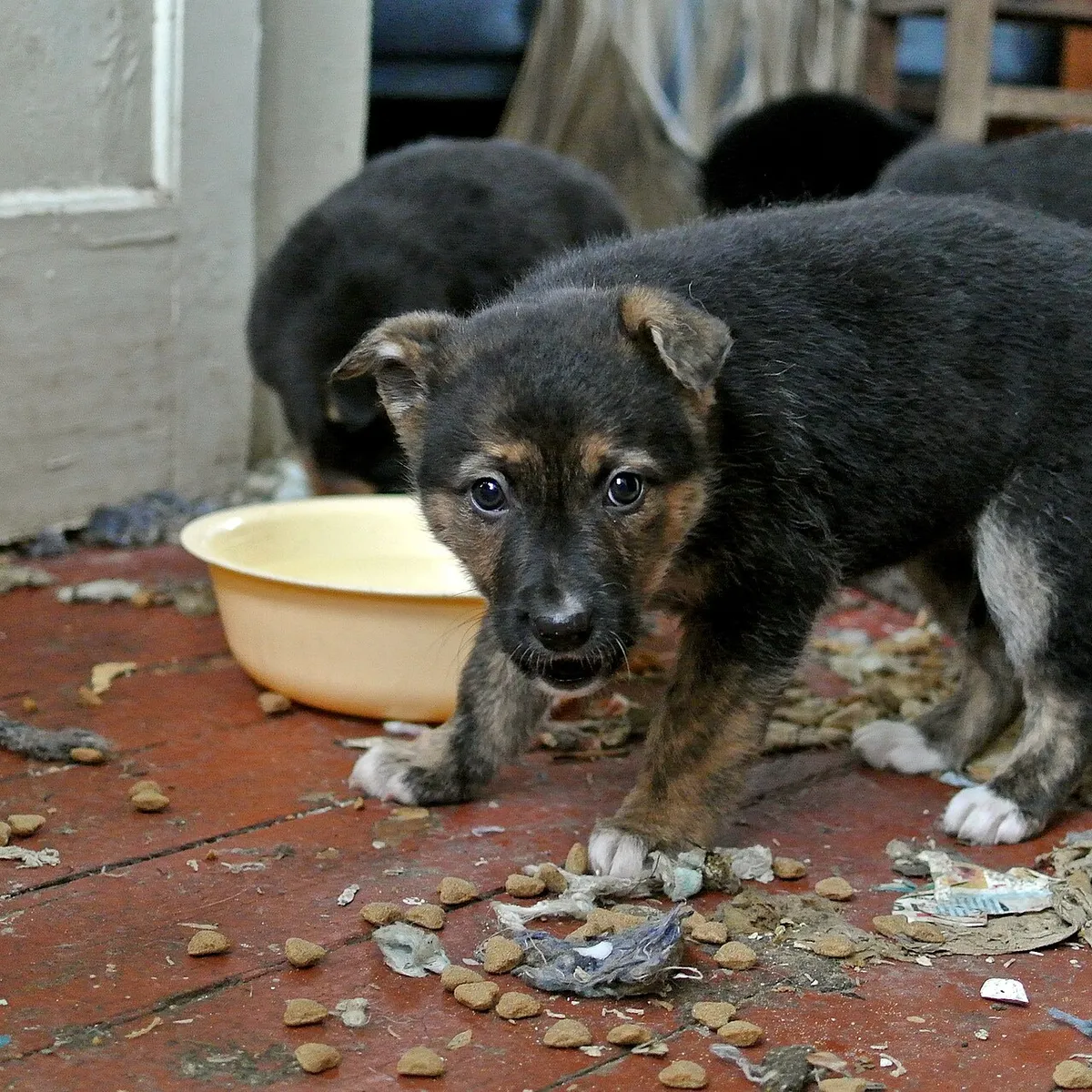
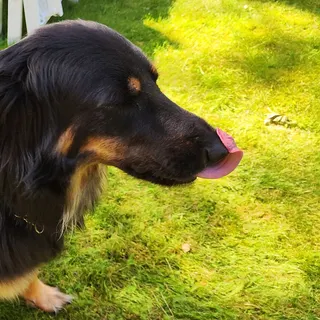
Photo: “Chewing some dog food (8619258895)” by Ivan Bandura, CC BY 2.0, cropped.
Not a substitute for your vet
This guide is general information for healthy adult dogs. Every dog is different — age, size, allergies and health conditions all matter. Ask your veterinarian before changing your dog’s diet or care.
Possible poisoning? US: ASPCA Animal Poison Control (888) 426-4435 or Pet Poison Helpline (855) 764-7661 (fees may apply). Elsewhere: call your vet or nearest emergency animal hospital right away.
 Up next How Much Should I Feed My Dog? (Simple Chart by Weight)
Save this for later — pin it to your dog board so you can find it fast.
Pin itKeep reading
-
3-Ingredient Frozen Dog Treats
Easy homemade frozen dog treats with just 3 ingredients and 10 minutes of prep. Plus safe swaps, portion tips and how long they keep.
Pumpkin + peanut butter + yogurt -
Can Dogs Eat Bananas? Yes.
Bananas are a safe, healthy treat for most dogs in small amounts. How much to give by size, how to serve it, and when to skip it.
Small dog: 1–2 slices · Large: ½ banana -
Can Dogs Eat Cheese?
Most dogs can have small pieces of plain cheese. Which cheeses are better, which to avoid, how much to give and when cheese is a bad idea.
Pea-sized pieces of plain cheese