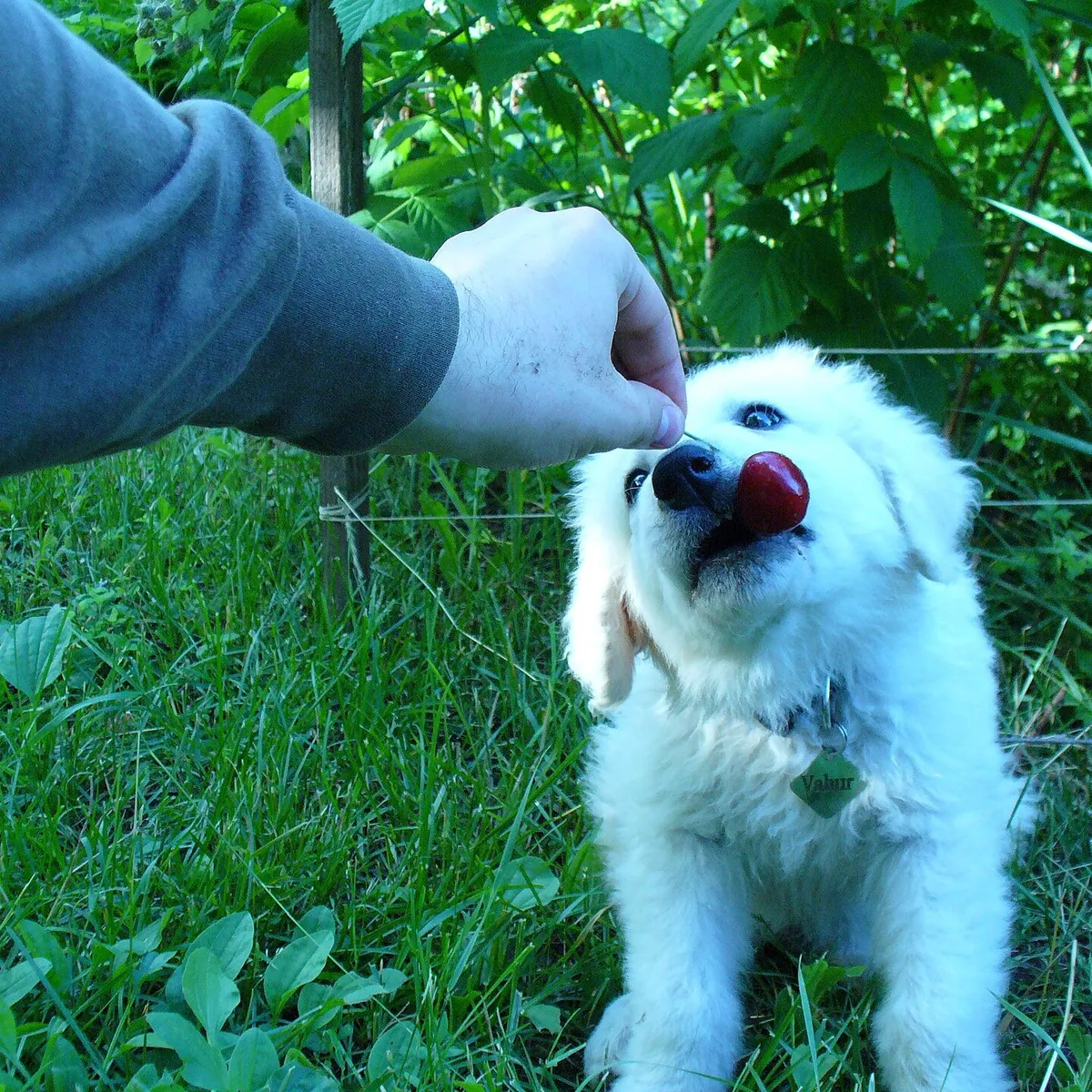
Small pieces of plain, mild cheese are fine for most dogs as a treat. Skip blue cheese, cheese with garlic, onion or herbs, and big portions.
In this guide
Yes, most dogs can eat cheese in small amounts — pea-sized pieces of plain, mild cheese make great training treats. The risks come from big portions (fat and salt), lactose, and cheeses with added garlic, onion, herbs or blue mold.
Cheese by cheese
| Cheese | Verdict | Why |
|---|---|---|
| Mozzarella (low-moisture or fresh) | Good pick | Lower in fat and salt than most |
| Cottage cheese (plain) | Good pick | Mild, lower fat; small spoonful |
| Mild cheddar | OK in small cubes | Low lactose; fatty, so keep it tiny |
| Swiss | OK in small cubes | Low lactose |
| Parmesan | Pinch only | Very salty |
| Feta, halloumi | Skip or tiny taste | Very salty |
| Cream cheese (plain) | Tiny smear | High fat |
| Brie, camembert, triple cream | Skip | Very high fat |
| Blue cheese (Stilton, Roquefort, Gorgonzola) | No | Mold can produce compounds that cause tremors and seizures |
| Cheese with garlic, onion, chives or herbs | No | Alliums are toxic to dogs |
| Processed cheese slices, cheese sauce | Skip | Salt, additives, sometimes onion powder |
How much cheese is OK?
Cheese has about 110 calories per ounce (28 g). A pea-sized cube is only a few calories, which is why it works so well for training.
- Small dogs (under 20 lb / 9 kg): a few pea-sized pieces a day
- Medium dogs: 5–8 small pieces
- Large dogs: up to about ½ oz (15 g) spread over the day
Keep all treats under about 10% of daily calories — find your dog’s number in the dog food calculator.
The first time, give one piece and watch for gas, vomiting or diarrhea over the next day.
When to skip cheese completely
- Pancreatitis now or in the past: fatty foods can trigger flare-ups.
- Overweight dogs: cheese adds up fast. Use green beans or carrot coins instead (see human foods dogs can eat).
- Kidney or heart disease, or a low-salt diet: ask your vet.
- Food allergies to dairy: some dogs react with itchy skin or upset stomach.
- Dogs on certain antibiotics: some medicines don’t mix with dairy. Ask your vet before hiding pills in cheese.
The pill-pocket trick
Wrapping a pill in a little mozzarella or a smear of cream cheese is a classic. Check with your vet that the medicine can be given with food, and use the smallest piece that hides it.
Cheese sits in the “careful” group, along with foods like peanut butter. For the hard no’s, read 7 foods your dog should never eat.
Frequently asked questions
Are dogs lactose intolerant?
Many adult dogs make less of the enzyme that digests lactose. Hard and aged cheeses have less lactose than milk, so small amounts are usually tolerated, but some dogs still get gas or diarrhea.
Why is blue cheese bad for dogs?
The molds used to make blue cheeses such as Stilton and Roquefort can produce a substance that may cause vomiting, tremors and even seizures in dogs if they eat enough. It’s simply not worth the risk.
Can dogs eat cream cheese?
Plain cream cheese is not toxic, but it’s high in fat. A tiny smear is fine for most dogs; flavored versions with garlic, chives or onion are not.
Can dogs eat cheese every day?
A few pea-sized pieces a day as training rewards are fine for most dogs, as long as you count them in the daily treat budget of about 10% of calories.
Sources
- American Kennel Club — Human Foods Dogs Can and Can’t Eat
- ASPCA — People Foods to Avoid Feeding Your Pets
- VCA Animal Hospitals — Pancreatitis in Dogs
We summarize what these organizations publish in plain English. How we write and check our guides.
Photo: “Kölyök kuvasz” by Vkoves, public domain, cropped.

Not a substitute for your vet
This guide is general information for healthy adult dogs. Every dog is different — age, size, allergies and health conditions all matter. Ask your veterinarian before changing your dog’s diet or care.
Possible poisoning? US: ASPCA Animal Poison Control (888) 426-4435 or Pet Poison Helpline (855) 764-7661 (fees may apply). Elsewhere: call your vet or nearest emergency animal hospital right away.
 Up next Can Dogs Eat Bananas? Yes — Here’s How Much Is Safe
Save this for later — pin it to your dog board so you can find it fast.
Pin itKeep reading
-

Can Dogs Eat Grapes? No.
Grapes and raisins can cause sudden kidney failure in dogs, even in small amounts. Learn the signs, what to do right away, and safer fruit swaps.
No known safe amount — call your vet -
7 Foods Your Dog Should Never Eat
Chocolate, grapes, xylitol, onions and more: the 7 most dangerous everyday foods for dogs, why they’re toxic and what to do if your dog eats one.
Chocolate, grapes, xylitol, onions & more -
How Much Chocolate Is Toxic to Dogs?
A chart showing roughly how much milk, dark and baking chocolate can make a dog sick, by weight — and why you should call your vet anyway.
20 lb dog: ~1 oz of dark chocolate