In this guide
- 1. Chocolate
- 2. Grapes and raisins
- 3. Xylitol (birch sugar)
- 4. Onions, garlic, leeks and chives
- 5. Macadamia nuts
- 6. Alcohol
- 7. Caffeine
- How much is too much? Numbers by dog weight
- How fast each one hits
- What to do if your dog eats one of these foods
- Go straight to an emergency clinic if you see
- Three worked examples
- Myths that get dogs hurt
- Hidden sources: where these turn up
- Easy ways to dog-proof your kitchen
- There’s more…
The 7 most dangerous everyday foods for dogs are chocolate, grapes and raisins, xylitol, onions and garlic, macadamia nuts, alcohol and caffeine. Several of them can make a dog seriously ill in small amounts, especially a small dog.
Below is why each one is a problem and what to do if your dog eats it. Save the list and share it with everyone who feeds your dog.
1. Chocolate
Chocolate contains theobromine and caffeine, which dogs process much more slowly than we do. They can cause vomiting, diarrhea, restlessness, a racing heart, tremors and, in serious cases, seizures.
The darker the chocolate, the more dangerous it is. Baking chocolate and cocoa powder are the worst; dark chocolate is next; milk chocolate has less, but a small dog can still get sick from a candy bar. White chocolate contains very little theobromine but lots of fat and sugar, which can upset the stomach.
Holidays are peak time for chocolate emergencies — think Halloween candy, Christmas stockings and Easter eggs. Use our chocolate toxicity chart to see why the type matters so much.
2. Grapes and raisins
Grapes, raisins, currants and sultanas can cause sudden kidney failure in some dogs. There is no known safe amount, and you can’t predict which dogs will react. Raisin bread, trail mix and fruit cake count too.
Read more in our full guide: Can dogs eat grapes?
3. Xylitol (birch sugar)
Xylitol is a sugar substitute found in sugar-free gum, mints, some peanut butters, sugar-free candy, baked goods, toothpaste and some vitamins. It may also be labeled “birch sugar”.
In dogs, xylitol triggers a big release of insulin, causing blood sugar to drop fast — sometimes within 30 to 60 minutes. Signs include vomiting, weakness, wobbling, collapse and seizures. Larger amounts can damage the liver.
Always check the label before giving your dog peanut butter (how to pick a safe one). Keep gum and mints out of handbags and coat pockets your dog can reach.
4. Onions, garlic, leeks and chives
All members of the allium family can damage a dog’s red blood cells, which can lead to anemia. This includes onions, garlic, leeks, shallots, scallions and chives — raw, cooked, dried or powdered.
The tricky part: symptoms can take several days to show. Watch for weakness, pale gums, fast breathing and reddish urine. Onion and garlic powder hide in many foods dogs love to steal, like gravy, stock, pizza, soups and seasoned meat.
5. Macadamia nuts
Macadamia nuts can cause weakness (especially in the back legs), wobbliness, vomiting, tremors and fever in dogs, usually within 12 hours. Most dogs recover with care, but it’s an unpleasant experience — and macadamias often come with chocolate, which adds a second danger.
They’re common in Australia (they’re native there!) and in cookies, so be careful with baked treats.
6. Alcohol
Dogs are much more sensitive to alcohol than people. Even small amounts — a few sips of a drink, a piece of rum cake, or raw bread dough (which produces alcohol as it ferments) — can cause vomiting, wobbliness, low body temperature, breathing problems and low blood sugar.
Never leave drinks on the coffee table at parties.
7. Caffeine
Coffee, tea, energy drinks, coffee grounds, tea bags and caffeine pills affect dogs in a similar way to chocolate: restlessness, panting, a fast heartbeat, vomiting and tremors. Used coffee grounds and tea bags in the kitchen trash are a classic hazard — use a bin with a lid.
How much is too much? Numbers by dog weight
Vets work in milligrams or grams per kilogram of body weight, which is why the same snack can be nothing for a Labrador and an emergency for a Chihuahua. The table turns the published figures into amounts for four common sizes.
| Food | Published level that has caused problems | 10 lb dog | 25 lb dog | 50 lb dog | 75 lb dog |
|---|---|---|---|---|---|
| Xylitol (low blood sugar) | over 0.1 g/kg | 0.45 g | 1.1 g | 2.3 g | 3.4 g |
| Xylitol (liver damage possible) | over 0.5 g/kg | 2.3 g | 5.7 g | 11 g | 17 g |
| Grapes or raisins | more than 1 per 10 lb | more than 1 | 2–3 | 5 | 7–8 |
| Raw onion | 15–30 g/kg | from ~70 g | from ~170 g | from ~340 g | from ~510 g |
| Macadamia nuts | 2.4 g/kg | ~11 g (about 4 nuts) | ~27 g (about 11) | ~54 g (about 22) | ~82 g (about 33) |
Where the figures come from: xylitol from the Merck Veterinary Manual’s xylitol chapter, grapes from Merck’s grape and raisin chapter (it links the risk to tartaric acid, which varies from fruit to fruit), onion from Merck’s garlic and onion chapter, and macadamias from Merck’s macadamia chapter. Nut counts assume a kernel of roughly 2.5 g.
How to read this table:
- These are not safe limits. They are amounts at which dogs have become ill. Below them, a sensitive dog can still react, and with grapes there is no known safe amount at all.
- Garlic is 3–5 times more toxic than onion, according to Merck, so a garlic-heavy dish counts for far more than the same weight of onion.
- Dried and powdered forms pack more into less. A spoonful of onion powder or a handful of raisins is a much bigger dose than it looks.
- For chocolate, the type matters more than the weight, so it gets its own chocolate toxicity chart.
How fast each one hits
Some of these foods make a dog sick within the hour; others look harmless for days. A dog that seems fine has not necessarily escaped.
| Food | When signs usually start | What can follow |
|---|---|---|
| Xylitol | Within 30 minutes; up to 12–18 hours with some gums | Liver injury signs at 24–48 hours |
| Chocolate | 6–12 hours | Theobromine lingers: its half-life in dogs is about 17.5 hours |
| Grapes and raisins | Vomiting or diarrhea at 6–12 hours | Kidney failure within 24–72 hours |
| Macadamia nuts | Within 12 hours | Usually back to normal within 12–48 hours |
| Onion and garlic | Red blood cell damage starts within 24 hours | Anemia signs can take several days to appear |
Timings are from the Merck chapters linked above and Merck’s chocolate chapter. The practical lesson: call when you find the evidence, not when the symptoms start. For grapes and xylitol, the window when treatment works best is before your dog looks sick.
What to do if your dog eats one of these foods
- Take the food away and keep it (or the packaging) so you know what and how much was eaten.
- Call your vet, an emergency clinic or a pet poison hotline right away. US: ASPCA Animal Poison Control (888) 426-4435 or Pet Poison Helpline (855) 764-7661 (fees may apply). Australia: the Animal Poisons Helpline, 1300 869 738. Elsewhere, call your vet or the nearest emergency animal hospital.
- Don’t try home remedies or make your dog vomit unless a vet tells you to.
- Tell them your dog’s weight, what was eaten, how much and when.
Acting quickly gives your vet the most options — and often means a simpler, cheaper treatment.
Go straight to an emergency clinic if you see
Don’t wait on hold if your dog has any of these. Get in the car and call from the road:
- Collapse, or can’t stand or walk straight
- A seizure or uncontrolled trembling
- Repeated vomiting, or retching with nothing coming up
- Very pale, white or yellowish gums (our dog gum color chart shows what normal looks like)
- Fast, labored breathing at rest
- Unusual sleepiness or confusion
Three worked examples
These use the table above. They show why weight and form matter. They are not a substitute for a call.
A 12 lb Shih Tzu eats 4 raisins from a cookie. Merck’s figure is more than one raisin per 10 lb, so 4 raisins is well past it for this dog. This is a call-now situation, even if he seems normal, because kidney damage shows up a day or more later.
A 60 lb Lab steals a 5-pack of sugar-free gum. Merck’s low blood sugar level for a 60 lb dog (27 kg) is about 2.7 g of xylitol. Gum brands vary a lot, so you can’t tell from the wrapper whether he ate more than that. The FDA notes that blood sugar can drop within 10 to 60 minutes. Call immediately and have the wrapper in your hand.
A 25 lb terrier licks up a plate of gravy made with onion and garlic powder. The raw-onion figure for this dog starts around 170 g, but powder is concentrated and garlic is several times stronger, so the table can’t clear it. Call for advice and watch for weakness, pale gums or reddish urine over the next few days.
Myths that get dogs hurt
“My dog ate grapes before and was fine.” Merck says the tartaric acid content of grapes varies, so effects vary. A past lucky escape tells you nothing about the next bunch.
“White chocolate is safe.” It has very little theobromine, but the fat and sugar can still cause vomiting and diarrhea. It’s often mixed with macadamias, too.
“A bit of garlic is good for fleas.” No dose of garlic is recommended for dogs, and garlic is the most potent member of the onion family.
“I’ll make him throw up with salt or hydrogen peroxide.” Salt can cause salt poisoning, and making a dog vomit is not always safe. Some situations make it risky. Get advice first.
“It’s fine, he’s acting normal.” See the timing table. Xylitol in gum, grapes and onions can all take hours to days before signs show.
Hidden sources: where these turn up
| Where you’d find it | What’s hiding in it |
|---|---|
| Trail mix, granola, fruit cake | Raisins, macadamias, chocolate |
| Sugar-free gum, mints, “skinny” ice cream, some nut butters | Xylitol (also called birch sugar) |
| Chewable vitamins, cough syrup, toothpaste, mouthwash | Xylitol (on the FDA’s list) |
| Gravy, stock cubes, soup, pizza, seasoned meat | Onion or garlic powder |
| Macadamia cookies and chocolate-coated macadamias | Macadamias plus chocolate |
| Rum cake, eggnog, unbaked bread dough | Alcohol |
| Energy drinks, coffee grounds, tea bags, caffeine pills | Caffeine |
Easy ways to dog-proof your kitchen
- Keep counters clear, especially when you leave the room.
- Store dangerous foods in high cupboards or closed containers.
- Use a trash can with a locking lid.
- Ask guests not to feed your dog from their plate.
- Teach a reliable “leave it” and “drop it”.
There’s more…
These seven are the best-known dangers, but they’re not the only ones. In Part 2, we cover 7 more foods that surprise a lot of owners — including a few you might be sharing right now.
Frequently asked questions
What is the most toxic food for dogs?
Xylitol is one of the most dangerous because tiny amounts can cause a sudden drop in blood sugar and, at higher doses, liver damage. Grapes and raisins are also high-risk because there is no known safe amount.
Is a little chocolate OK for dogs?
No. The risk depends on the type of chocolate and your dog’s size. Dark and baking chocolate are the most dangerous, but any chocolate can cause problems. Call your vet if your dog eats some.
Can dogs eat food cooked with onion or garlic?
It’s best not to share it. Onion and garlic are toxic in all forms — raw, cooked, powdered or dried — and the powders in seasonings, gravies and stock cubes are concentrated.
How long after eating something toxic will a dog show symptoms?
It varies from under an hour (xylitol) to several days (onion and garlic). Don’t wait for symptoms — call for advice as soon as you know your dog ate something risky.
How many grapes are dangerous for a dog?
There is no known safe number. The Merck Veterinary Manual says more than one grape or raisin per 10 lb of body weight may carry enough tartaric acid to harm the kidneys, and some dogs react to less. Call your vet for any amount.
Sources
- ASPCA — People Foods to Avoid Feeding Your Pets
- Merck Veterinary Manual — Grape, Raisin, and Tamarind Toxicosis in Dogs
- Merck Veterinary Manual — Xylitol Toxicosis in Dogs
- Merck Veterinary Manual — Garlic and Onion (Allium spp) Toxicosis in Animals
We summarize what these organizations publish in plain English. How we write and check our guides.
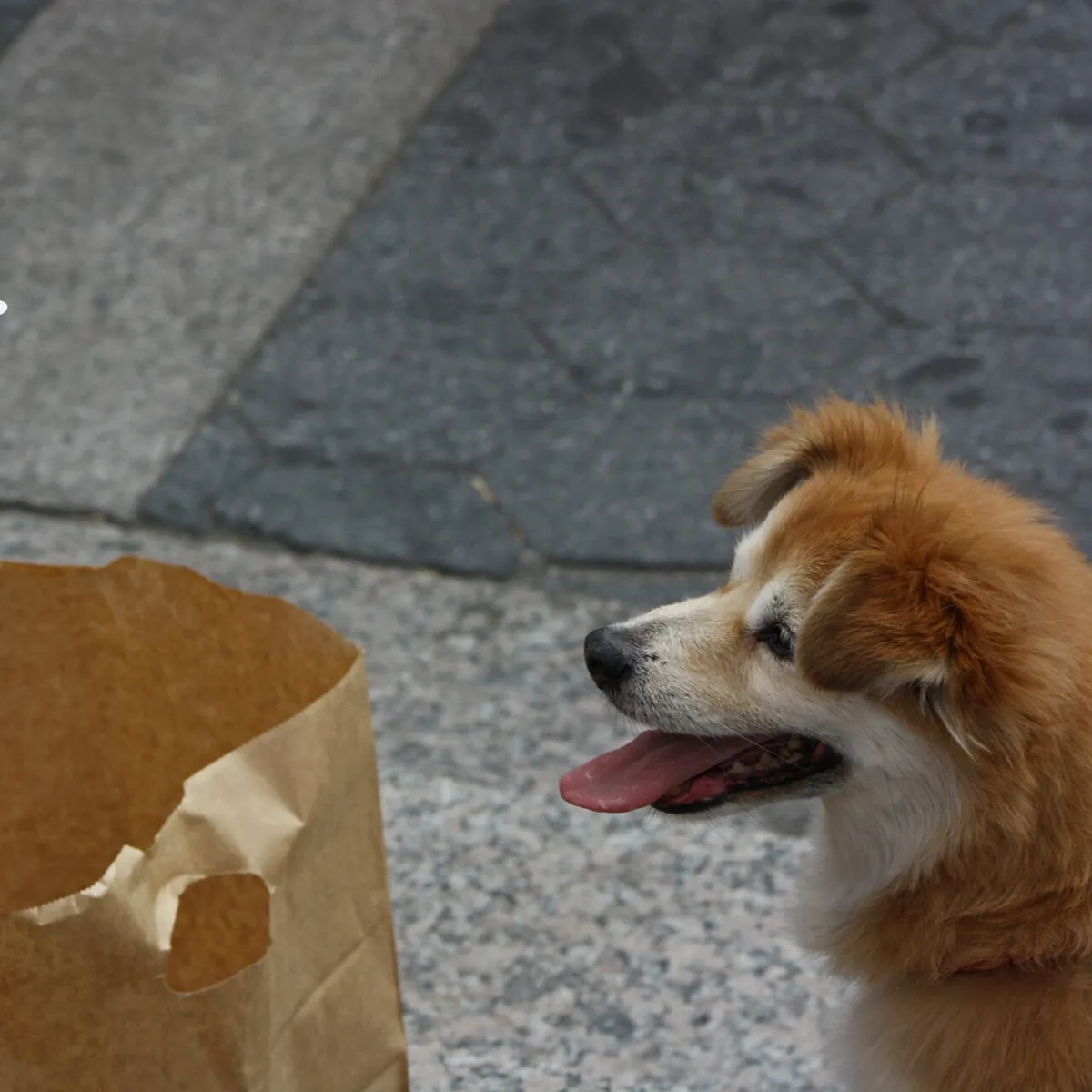
Photo: “Begging (4882730182)” by istolethetv, CC BY 2.0, cropped.

Not a substitute for your vet
This guide is general information for healthy adult dogs. Every dog is different — age, size, allergies and health conditions all matter. Ask your veterinarian before changing your dog’s diet or care.
Possible poisoning? US: ASPCA Animal Poison Control (888) 426-4435 or Pet Poison Helpline (855) 764-7661 (fees may apply). Elsewhere: call your vet or nearest emergency animal hospital right away.
 Next in this series · Part 2 7 More Foods Dogs Should Never Eat (Part 2)
Save this for later — pin it to your dog board so you can find it fast.
Pin itKeep reading
-

Can Dogs Eat Bananas? Yes.
Bananas are a safe, healthy treat for most dogs in small amounts. How much to give by size, how to serve it, and when to skip it.
Small dog: 1–2 slices · Large: ½ banana -
Can Dogs Eat Cheese?
Most dogs can have small pieces of plain cheese. Which cheeses are better, which to avoid, how much to give and when cheese is a bad idea.
Pea-sized pieces of plain cheese -

Can Dogs Eat Peanut Butter?
Most dogs can eat plain peanut butter in small amounts, but some brands contain xylitol, which is toxic. How to read the label and how much to give.
Check the label for xylitol first