In this guide
Grain-free dog food isn’t healthier for most dogs, and it may carry a risk: since 2018 the FDA has investigated reports of heart disease (dilated cardiomyopathy, DCM) in dogs eating certain diets, many of them grain-free. No cause has been proven, but unless your vet recommends it for a specific reason, most dogs do well on a quality diet that includes grains.
What the FDA investigation is about
In July 2018 the U.S. Food and Drug Administration began looking into reports of DCM — a disease where the heart muscle weakens and the heart enlarges — in dogs of breeds not usually prone to it. Many of the reported dogs were eating diets that were grain-free and listed peas, lentils, other legumes or potatoes high on the ingredient list.
What we know so far:
- The reports suggest a possible link, not proof of cause.
- Many factors are being studied: ingredients, nutrient levels, how diets are formulated, and genetics.
- Some dogs improved after a diet change and treatment by their vet.
Researchers at the Cummings School of Veterinary Medicine at Tufts University have written extensively about this on their Petfoodology site, and suggest owners look closely at diets they describe as boutique, exotic-ingredient or grain-free.
6 myths vs. facts
Myth 1: “Grains are just cheap filler.”
Fact: cooked grains like rice, oats and barley supply energy, fiber, vitamins and minerals. Dogs digest them well.
Myth 2: “Dogs are wolves, so they shouldn’t eat grains.”
Fact: dogs have lived alongside people for thousands of years and have adapted to digest starch much better than wolves.
Myth 3: “Lots of dogs are allergic to grains.”
Fact: food allergies in dogs are less common than people think, and when they happen, they’re more often to proteins like beef, dairy or chicken than to grains.
Myth 4: “Grain-free means low-carb.”
Fact: most grain-free foods replace grains with potatoes, peas, lentils or tapioca — still carbohydrates.
Myth 5: “Grain-free is better for sensitive stomachs.”
Fact: some dogs do better on a different food, but it’s usually about the overall recipe, fat level or a specific ingredient — not grains. Your vet can help you work it out.
Myth 6: “If it’s expensive and grain-free, it must be good.”
Fact: price and trendy labels don’t guarantee good nutrition. What matters is that the food is complete and balanced for your dog’s life stage and made by a company with qualified nutritionists and strong quality control. Learn how to read a dog food label.
What to do if your dog eats grain-free
- Don’t panic. Most dogs eating grain-free food are not sick.
- Talk to your vet, especially for breeds prone to heart disease or if your dog shows any signs below.
- If you switch foods, do it gradually over about 7 days, mixing more of the new food each day.
- Re-check the portion: calories per cup differ between foods (use the dog food calculator).
Signs of heart trouble to watch for
- Tiring easily on walks, or not wanting to play
- Coughing, especially at night
- Fast or hard breathing at rest
- Fainting or collapse
- A swollen belly
See your vet promptly if you notice any of these. Heart disease can be managed better when it’s found early.
For everyday feeding basics, see how much to feed your dog and our puppy feeding schedule.
Frequently asked questions
Does grain-free dog food cause heart problems?
It hasn’t been proven. The FDA has investigated reports of DCM in dogs eating certain diets — many grain-free and with peas, lentils, other legumes or potatoes high on the ingredient list — but no single cause has been confirmed. Research is ongoing.
Should I switch my dog off grain-free food?
Talk to your vet. Many veterinary nutritionists suggest choosing a diet with grains from a company with strong nutrition expertise unless your dog has a specific medical reason to avoid them.
Are grains just filler?
No. Grains such as rice, oats, barley and corn provide energy, fiber, some protein, vitamins and minerals. Dogs digest cooked grains well.
What are signs of DCM in dogs?
Signs can include tiring easily, weakness, coughing, fast or hard breathing, fainting and a swollen belly. Some dogs show no signs early on. See your vet if you notice any of these.
Sources
- U.S. FDA — Investigation into diets and canine dilated cardiomyopathy (DCM)
- Petfoodology — Cummings School of Veterinary Medicine at Tufts University
- WSAVA Global Nutrition Guidelines
We summarize what these organizations publish in plain English. How we write and check our guides.
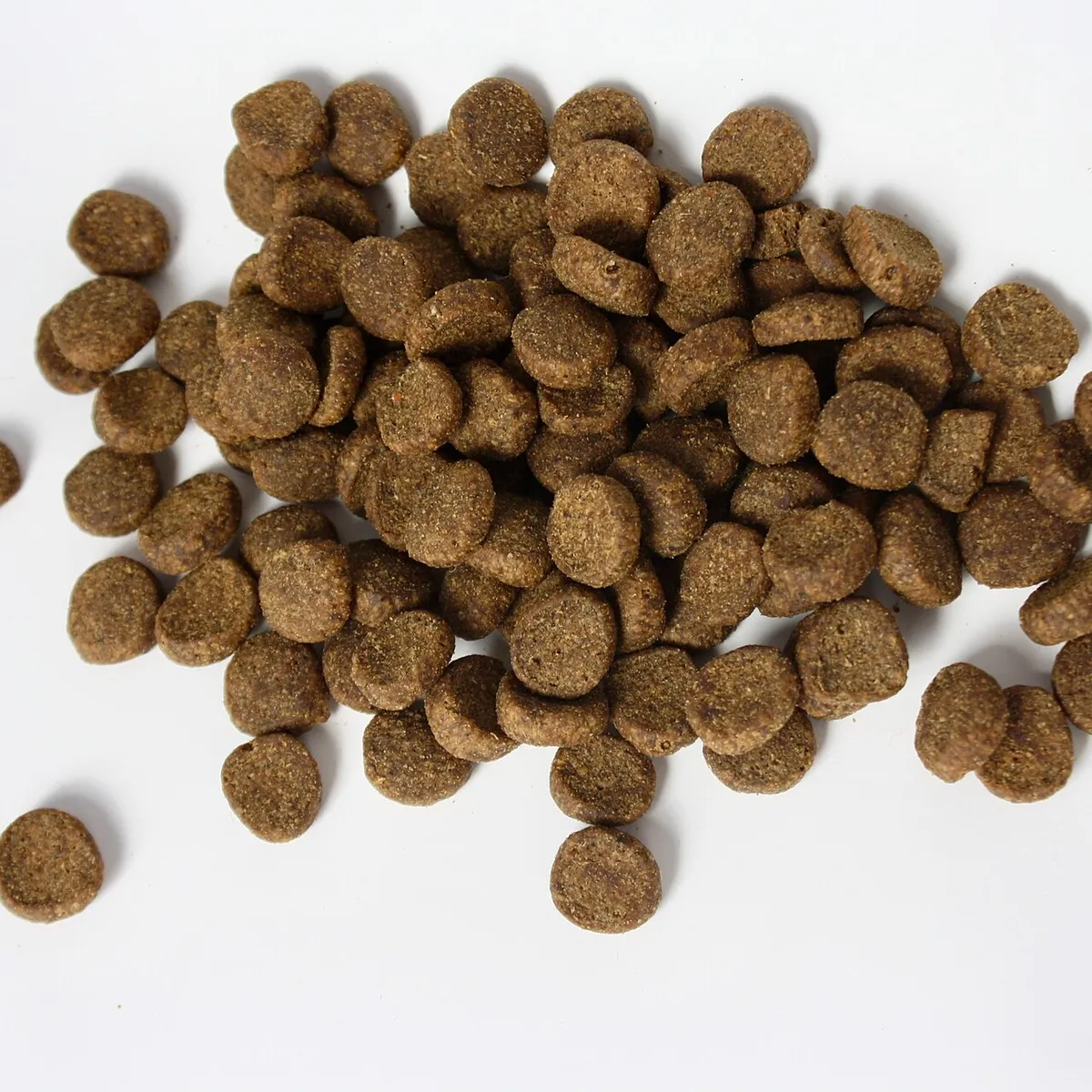
Photo: “Pile of Kibble Dog Food (51049786351)” by Megan Marrs, CC BY 2.0, cropped.

Not a substitute for your vet
This guide is general information for healthy adult dogs. Every dog is different — age, size, allergies and health conditions all matter. Ask your veterinarian before changing your dog’s diet or care.
Possible poisoning? US: ASPCA Animal Poison Control (888) 426-4435 or Pet Poison Helpline (855) 764-7661 (fees may apply). Elsewhere: call your vet or nearest emergency animal hospital right away.
 Up next How to Read a Dog Food Label in 30 Seconds (5 Things to Check)
Save this for later — pin it to your dog board so you can find it fast.
Pin itKeep reading
-

3-Ingredient Frozen Dog Treats
Easy homemade frozen dog treats with just 3 ingredients and 10 minutes of prep. Plus safe swaps, portion tips and how long they keep.
Pumpkin + peanut butter + yogurt -

Can Dogs Eat Bananas? Yes.
Bananas are a safe, healthy treat for most dogs in small amounts. How much to give by size, how to serve it, and when to skip it.
Small dog: 1–2 slices · Large: ½ banana -

Can Dogs Eat Cheese?
Most dogs can have small pieces of plain cheese. Which cheeses are better, which to avoid, how much to give and when cheese is a bad idea.
Pea-sized pieces of plain cheese